
What Is a Dust Extraction System?
Dust is one of those hazards that quietly builds up until it starts affecting your team's health, your equipment, or your compliance record. A dust extraction system, known as a Localised Exhaust Ventilation, (LEV) tackles the problem at its source rather than after the fact. This guide covers how dust extraction works, the difference between fixed and mobile dust extraction, and how to work out whether your business needs one.
What Is a Dust Extraction System?
A dust extraction system is a piece of equipment, or a network of equipment, designed to capture and remove dust and airborne particles at the point, or as close to the point where they are created. Rather than waiting for dust to migrate through a workspace, including a worker's or visitor's breathing zone, it relies on a purpose-designed ventilation system to clear it at the source, which the Health and Safety Executive consistently identifies as the most effective form of control.
Systems vary enormously in scale. At one end sits a single portable unit, positioned next to a minor working activity such as a saw bench or sander with on-tool connection. At the other end, sits a fully ducted network serving an entire production floor, protecting multiple machines that are linked to one central extraction point.
Whatever the scale, the underlying goal is the same: stop respirable dust from reaching the air that your team breathes as well as the surrounding working surfaces, rather than relying on clean-up procedures afterwards which often than create additionally airborne respirable dust issues.
How Does Dust Extraction Work?
Most dust extraction systems follow the same basic sequence, regardless of size or industry. Understanding each stage makes it much easier to spot where a system might be underperforming.
The process starts with capture, where a hood, nozzle or on-tool attachment sits close to the source of the dust, followed by transport, where ducting or hosing carries the dust-laden air away from the work area. The stages typically run in this order:
- Capture: a hood, nozzle or on-tool attachment positioned close to the source of the dust
- Transport: ducting or flexible hosing carries dust-laden air away from the work area
- Filtration: the air passes through one or more filters that trap dust particles for removal
- Return or exhaust: filtered air is released back into the workspace or vented outside
How well the whole system performs comes down to how closely each stage is matched to the job. Poor hood placement, undersized ducting or the wrong filter type can leave an otherwise well specified system performing far below its potential in day to day use.
A system design is imperative to achieve a performance to efficiently remove the respirable dust before it migrates to cause the workers harm.
Fixed vs Mobile Dust Extraction: Which Do You Need?
This is one of the most common questions we are asked, and the honest answer depends entirely on how and where the dust is generated. Many businesses end up using a combination of both, with fixed extraction covering the main production area and mobile units handling ad hoc or site based tasks. It is always important to seek professional advice, as the wrong choice could be costly.
Fixed Dust Extraction Systems
Fixed, or ducted, dust extraction is built into the building itself, with permanent ductwork Protecting several machines or work areas to a central extraction unit. It suits businesses with workstations that do not move, such as a joinery workshop or a production line, and it copes well with extracting from multiple points at once over long periods of continuous use.
Mobile Dust Extraction Systems
Mobile dust extraction uses portable, self-contained units that can be moved to wherever the work is happening. It tends to be the better option when work locations change regularly, such as on construction sites or during maintenance visits, or when permanent ductwork is not practical due to space or budget. Ultra Protect's mobile dust extraction range, viewable at ultra-protect.co.uk/category/Mobile-Dust-Extraction, is built for exactly this kind of flexibility. Then it is deciding whether a L, M or H class system is required, with H class with its HEPA filtration providing the best protection.
Often, having a specialist in to conduct a dust sampling exercise can help to make the right decision
Choosing the Right Filters and Components
It is easy to focus purely on the extraction unit itself and overlook the components around it, but a dust extraction system is only as effective as its weakest link.
Filter Types Explained
Filter choice depends heavily on the material being extracted. Fine silica or wood dust generally needs a higher grade filter than general debris, and filters that are too coarse for the job will let fine particles pass straight through, undermining the whole point of the system.
Ducting, Hoods and Fan Sizing
Ducting that is too narrow, too long, or routed with too many sharp bends reduces airflow and can leave a powerful extractor performing poorly at the point that actually matters. Fan sizing and hood design need to be calculated together, not chosen separately, which is why a proper site assessment makes such a difference to how well a system performs once it is installed.
Do You Need Dust Extraction for Your Business?
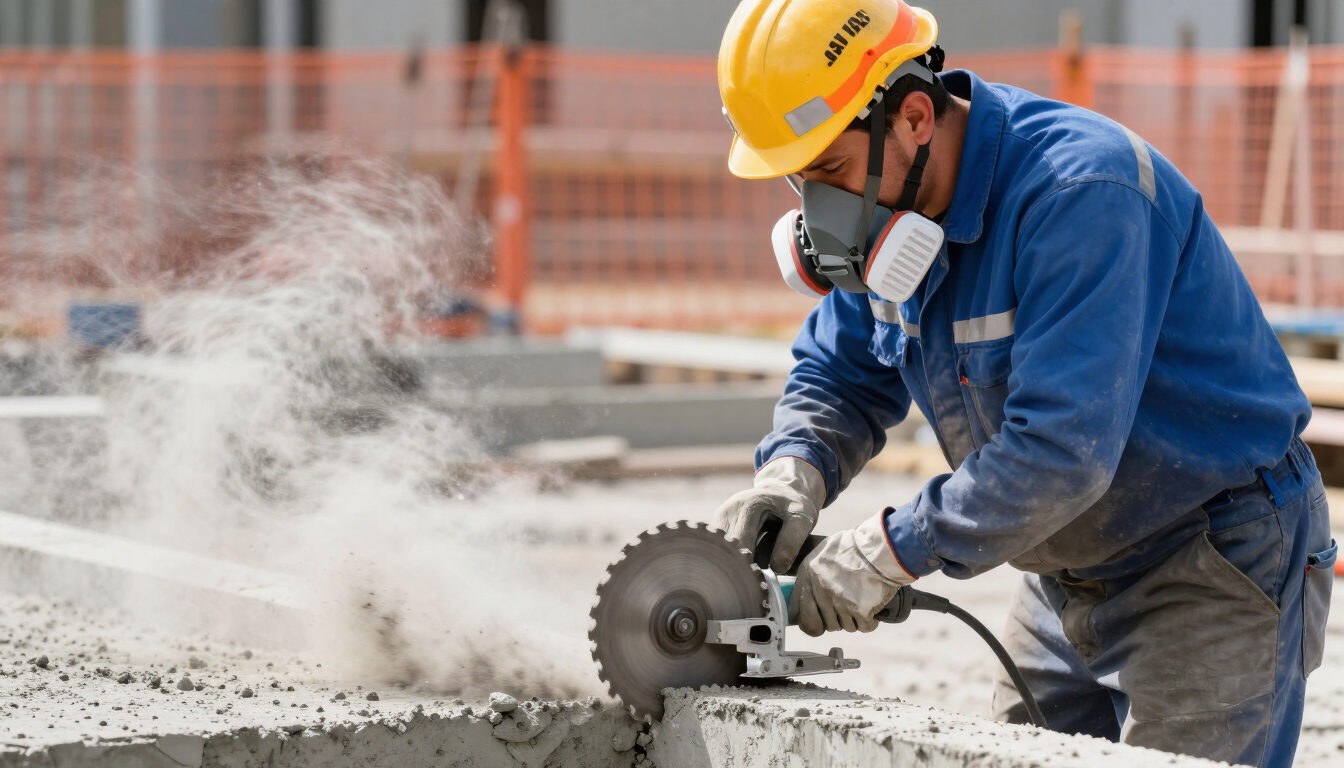
If any part of your work involves cutting, grinding, sanding, drilling, demolition or handling powders and granular materials, the answer is almost certainly yes, both for compliance and for practical reasons such as cleaner air, less cleanup time and longer equipment life.
Under COSHH, where dust exposure cannot be eliminated altogether, employers are required to control it as far below the relevant limit as is reasonably practicable, and a correctly specified extraction system is usually the single most effective control measure available. You can read the HSE's guidance on local exhaust ventilation, which covers dust extraction, at hse.gov.uk/lev/.
Beyond compliance, poor dust control has a habit of showing up in other ways too, from increased equipment wear to complaints from neighbouring properties, particularly on sites close to residential areas. The HSE's construction dust guidance at hse.gov.uk/construction/faq-dust.htm sets out the wider practical case for controlling dust at source.
Frequently Asked Questions
These are the questions we hear most often from businesses weighing up their dust extraction options for the first time.
What is the difference between dust extraction and dust collection?
The terms are often used interchangeably, but dust collection usually refers to the filtration and containment stage, while dust extraction describes the whole process from capture through to filtered air return.
How often should dust extraction filters be changed?
This depends on usage and the material being extracted, but a noticeable drop in suction, increased noise, or visible dust escaping the unit are all signs a filter needs attention sooner rather than later.
Can one dust extractor serve multiple machines?
Yes, provided the system is sized correctly. A central fixed extraction unit can serve several machines through ducted branches, but this needs proper airflow calculations to avoid underperforming at any single extraction point.
Is dust extraction a legal requirement?
There is no single blanket rule requiring extraction on every site, but where dust exposure cannot be avoided, COSHH requires employers to control it as far below the exposure limit as reasonably practicable, and extraction is usually central to achieving that.
Getting the Right System First Time
Specifying the right dust extraction system is not simply a case of buying a unit off a shelf. It starts with understanding exactly how and where dust is generated on your site, which is why an assessment matters just as much as the equipment itself.
The system should be designed as every dust processes requires a bespoke system and performance
Provide a suitable installation so all components are selected and installed for both compliance and to give your workers health the best protection.
Receive a commission certification so future services have designed calculations to measure against
Plan an internal maintenance schedule with a Responsible Person so to optimise the systems performance
Plan a TExT at least every 14-months or sooner where a manufacturer's system recommends.
Ultra Protect pairs hands-on dust assessment expertise with access to the UK's leading dust extraction products, covering everything from mobile units through to fixed ducted systems designed around your site. Real-time air quality monitoring using a product such as Inbiot is often the first step in getting a system specified correctly.
If you are not sure whether fixed, mobile, or a combination of both is right for your business, get in touch with the Ultra Protect team and we will help you work it out before you spend a penny on equipment.