
SILICA DUST RISK ASSESSMENT
Explore our Silica Dust Risk Assessment Services
A silica dust risk assessment is a structured review of workplace activities that could expose employees or others to respirable crystalline silica.
The purpose is to identify potential sources of exposure, understand the circumstances in which exposure could occur and determine whether appropriate control measures are in place.
The objective is not simply to create paperwork.
A useful risk assessment should help your organisation understand the problem and make better decisions about how silica exposure is managed.
A good assessment should consider questions such as:
- Which materials contain crystalline silica?
- Which tasks generate dust?
- Who performs those tasks?
- Who else could be exposed?
- How often are the tasks carried out?
- How long do they take?
- Is the work undertaken indoors or outdoors?
- Could dust accumulate within an enclosed area?
- What tools and equipment are being used?
- What controls are currently in place?
- Are those controls suitable for the activity?
- Are workers using the controls correctly?
- Could settled dust create secondary exposure?
- Is exposure monitoring required?
- Should additional controls be considered?
- Is health surveillance potentially relevant?
Silica Dust Risk Assessments and COSHH
Workplace exposure to respirable crystalline silica falls within the requirements of the Control of Substances Hazardous to Health Regulations, commonly known as COSHH.
An important part of COSHH is identifying hazardous substances that may be present or generated by workplace processes and assessing the risks they create.
For silica dust, this means considering not only products supplied to the workplace but also dust generated during activities such as cutting, grinding, drilling or processing silica-containing materials.
- A suitable assessment should consider:
- The hazardous substance involved
- How exposure could occur
- Who may be exposed
- The level, type and duration of potential exposure
- Existing control measures
- Whether additional controls are required
- The need for monitoring where appropriate
- Maintenance and testing of controls
- Information, instruction and training
- Health surveillance where appropriate
A silica dust assessment should therefore form part of a wider workplace health strategy rather than being treated as a one-off compliance exercise.
Material
Different materials contain different amounts of crystalline silica. Working with concrete, sandstone, brick, mortar, tiles or engineered stone may create different exposure circumstances depending on the composition of the material and how it is being processed.
Task
High-energy activities can produce substantial amounts of airborne dust in a relatively short period. Examples include cutting, grinding, chasing and scabbling.
Duration
The longer an employee carries out a dust-generating task, the greater their potential cumulative exposure may become.
Frequency
A task undertaken for a short period once a month presents a different exposure pattern from the same task being performed repeatedly throughout every working day.
Work Environment
Dust can accumulate more readily in enclosed or poorly ventilated spaces.
Outdoor work should not automatically be assumed to present a low risk, particularly where high-energy tools are used.
Controls
Water suppression, extraction, enclosure, segregation and other control measures can significantly influence exposure when they are appropriately selected, maintained and used.
Even well-designed controls can become ineffective when workers use equipment incorrectly, remove guards, fail to use extraction or adopt poor cleaning practices.
A strong silica risk assessment considers all of these factors together.
Our Expertise
What Materials Should Be Considered?
Crystalline silica is present in many materials used throughout construction and industry. A silica dust risk assessment may need to consider activities involving:
- Concrete
- Mortar
- Bricks
- Blocks
- Sandstone
- Granite
- Engineered stone
- Natural stone
- Tiles
- Paving
- Kerbs
- Sand
- Aggregates
- Mineral products
- Certain ceramic materials
It is important to understand the actual materials being worked rather than assuming that all workplace dust presents the same risk.
What Activities Can Generate Silica Dust?
The way a material is worked can be just as important as the material itself.
Potentially dust-generating activities include:
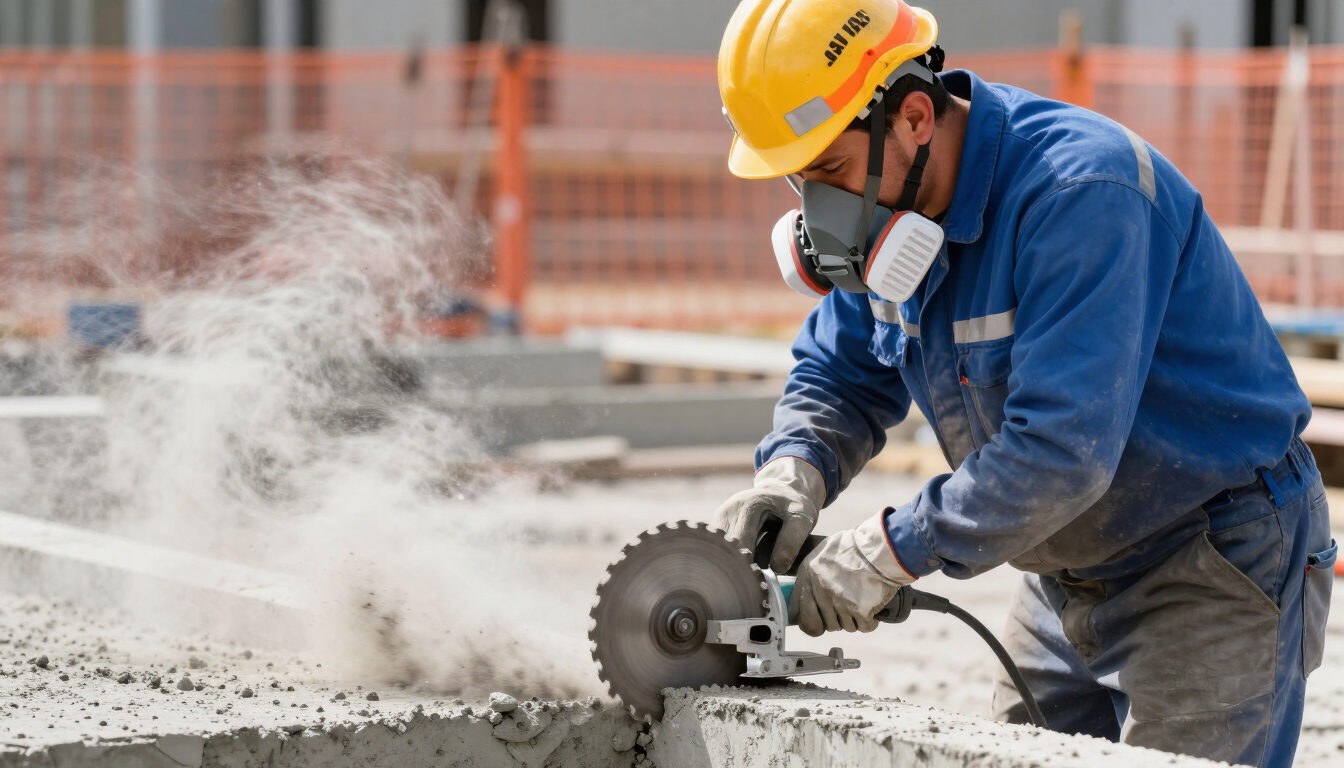
- Cutting
- Drilling
- Coring
- Grinding
- Chasing
- Scabbling
- Breaking
- Crushing
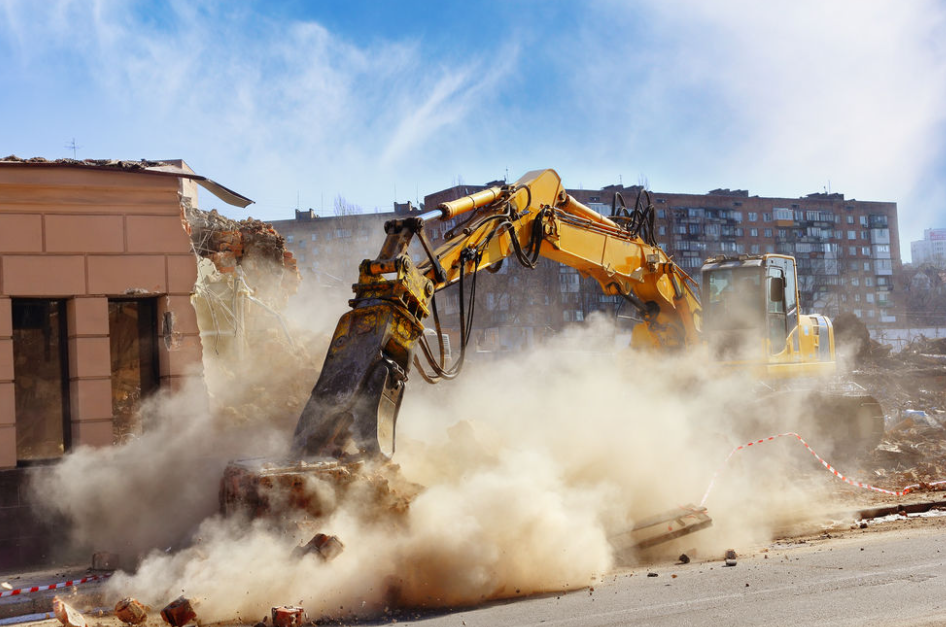
- Demolition
- Raking mortar
- Cutting paving
- Stone processing
- Polishing appropriate silica-containing materials
- Handling mineral powders
- Cleaning contaminated work areas
The assessment should consider the complete activity, including setup, processing, cleaning, maintenance and waste handling. Secondary activities are easily overlooked. For example, a well-controlled cutting process can still create exposure if accumulated dust is later disturbed during inappropriate cleaning.
Who Could Be Exposed to Silica Dust?
The person operating the tool is not necessarily the only person at risk.
A silica dust risk assessment should consider everyone who could reasonably be affected.
This may include:
- Machine operators
- Construction workers
- Labourers
- Groundworkers
- Stonemasons
- Maintenance staff
- Cleaners
- Contractors
- Supervisors
- Employees working nearby
- Visitors
- Other trades sharing the work area
Dust can spread beyond the immediate point at which it is generated.
This makes worker positioning, segregation, ventilation and the movement of people through dusty areas important parts of the assessment.
Silica Dust Risk Assessment in Construction
Construction is one of the key industries in which respirable crystalline silica needs careful management. Common construction materials including concrete, bricks, mortar, paving and sandstone can contain crystalline silica.
Potentially higher-risk tasks can include:
- Cutting concrete
- Cutting paving and kerbs
- Drilling and coring
- Grinding
- Chasing concrete or masonry
- Scabbling
- Breaking concrete
- Raking mortar
- Demolition
- Refurbishment
- Dry sweeping dusty areas
Construction sites can also be particularly challenging because activities, contractors, site conditions and work locations may change frequently. A silica dust risk assessment can help contractors understand where RCS is likely to be generated and whether the controls selected for individual tasks are appropriate. Ultra Protect works with construction businesses, contractors, site managers and developers throughout the UK.
Silica Risk Assessments for Manufacturing and Industry
Respirable crystalline silica is not solely a construction issue.
Industrial workplaces may also generate RCS when silica-containing materials are processed, handled or manufactured.
Relevant environments can include:
- Stone processing
- Engineered stone fabrication
- Brick manufacture
- Tile manufacture
- Ceramics
- Concrete product manufacturing
- Quarrying
- Mineral processing
- Aggregate handling
- Foundries
- Certain industrial manufacturing processes
Industrial environments can involve repeated or continuous processes, which makes understanding the frequency and duration of exposure particularly important.
A workplace assessment can help identify where exposure occurs throughout the production process and whether engineering controls and working practices remain suitable.
Our Expertise
Assessing Existing Silica Dust Controls
One of the most important parts of a silica dust risk assessment is reviewing what is already being done to control exposure.
Existing controls may include:
Water Suppression
Water can be used in appropriate applications to reduce the amount of fine dust becoming airborne. The assessment should consider whether sufficient water reaches the cutting or processing point and whether the system is being used correctly.
On-Tool Extraction
Suitable extraction can capture dust close to the point where it is generated. Its effectiveness depends on factors including equipment selection, airflow, maintenance and correct use.
Local Exhaust Ventilation
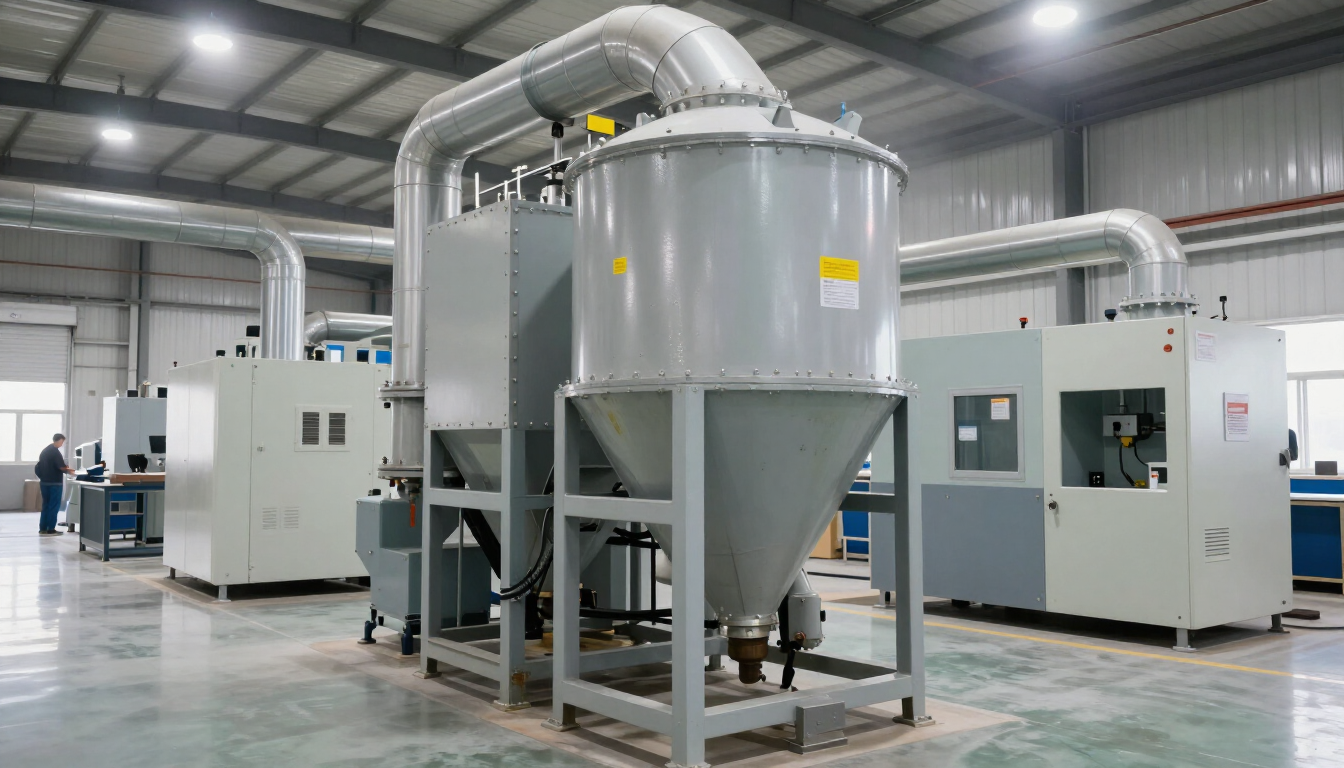
LEV systems may be used to capture airborne contaminants within industrial and manufacturing environments. Controls need to remain effective in practice, not simply be present.
Enclosure
Containing a dust-generating process can help prevent contamination from spreading into the wider workplace.
Segregation
Separating dusty activities from other workers can reduce the number of people potentially exposed.
Working Methods
Changing the way a task is performed may significantly reduce dust generation. Cleaning methods should avoid unnecessarily re-suspending settled dust into the air.
Respiratory Protective Equipment
RPE may be required as part of an overall control strategy. It should not automatically be treated as the first or only solution when exposure can be prevented or reduced using other measures.
Is Your Dust Extraction Actually Effective?
The presence of extraction equipment does not automatically demonstrate that silica exposure is being adequately controlled.
- A risk assessment should consider factors such as:
- Whether the extraction is suitable for the process
- Whether it captures dust close to the source
- Whether equipment is correctly connected
- Whether filters are maintained
- Whether airflow is sufficient
- Whether hoses are damaged
- Whether guards and extraction shrouds are correctly positioned
- Whether employees consistently use the system
- Whether dust still escapes into the workplace
Where the effectiveness of a control cannot be confidently determined through assessment alone,
silica dust monitoring may provide additional evidence.
Silica Dust Risk Assessment and Exposure Monitoring
Risk assessment and monitoring have different but complementary purposes.
A risk assessment identifies hazards, potential exposure circumstances and the adequacy of workplace controls.
Exposure monitoring can provide measurements that help businesses understand what workers are actually exposed to during particular tasks or working periods.
Monitoring may be useful where:
- Exposure levels are uncertain
- A high-risk process is being investigated
- Existing controls need to be evaluated
- Workplace conditions have changed
- New machinery or processes have been introduced
- A concern has been raised
- Additional evidence is needed
- Improvements need to be verified
Ultra Protect can provide both risk assessment and specialist silica dust monitoring, allowing the findings from one service to inform the other where appropriate.
Does a Silica Dust Risk Assessment Need Air Sampling?
Not every silica dust risk assessment automatically requires air sampling. In some workplaces, the materials, activities and established controls may provide sufficient information to make appropriate risk-management decisions.
In others, exposure may be uncertain or the effectiveness of existing controls may need to be verified.
Air sampling may therefore be useful where:
- There is uncertainty about worker exposure
- Higher-risk processes are undertaken
- Existing monitoring data is unavailable
- Controls need to be evaluated
- Work circumstances differ from recognised good practice
- Processes or materials have changed
- Previous results require further investigation
The important point is that monitoring should have a clear purpose. Ultra Protect can help determine whether exposure monitoring would add useful information to your silica dust assessment.
Reviewing Workplace Cleaning and Housekeeping
How silica-containing dust is cleaned can have a significant effect on exposure. Fine dust that has settled on surfaces can become airborne again when disturbed. A silica dust risk assessment should therefore examine housekeeping procedures as well as the original dust-generating process.
- Areas to consider include:
- How floors are cleaned
- How machinery is cleaned
- How work clothing is managed
- How accumulated dust is removed
- Whether appropriate extraction equipment is available
- How waste is handled
- Whether compressed air is used inappropriately
- Whether dry sweeping could re-suspend dust
Good housekeeping should support the overall dust control strategy rather than create another source of exposure.
Reviewing Respiratory Protective Equipment
Respiratory protective equipment may be necessary for some silica-generating activities. Where RPE is being used, a risk assessment should consider whether it is appropriate for the circumstances.
- Relevant questions may include:
- Is the correct type of RPE being provided?
- Is the protection level suitable?
- Is equipment compatible with other PPE?
- Has suitable face-fit testing been undertaken where required?
- Are workers clean-shaven where tight-fitting masks rely on a facial seal?
- Is RPE stored correctly?
- Is reusable equipment properly maintained?
- Are filters changed appropriately?
- Have employees been trained in correct use?
RPE should sit within a wider hierarchy of controls rather than becoming the default response to every dust problem.
Silica Dust Health Surveillance
Some workplaces involving regular exposure to respirable crystalline silica may also need to consider health surveillance.
The need for health surveillance depends on the nature of the work, exposure circumstances and likelihood of occupational disease developing.
A silica dust risk assessment can help identify relevant exposure circumstances and highlight where competent occupational health advice may be appropriate.
Health surveillance should never be regarded as a replacement for controlling exposure.
The priority remains preventing or adequately controlling the amount of RCS workers inhale.
Our Silica Dust Risk Assessment Process
Ultra Protect takes a practical, workplace-focused approach.
A typical assessment may involve:
01
Understanding Your Workplace
We begin by discussing your operations, workforce, materials and the reason the assessment is required.
02
Identifying Silica-Containing Materials
We consider the materials being used and where crystalline silica may be present.
03
Reviewing Dust-Generating Activities
We identify tasks that could generate respirable silica-containing dust.
04
Identifying Who May Be Exposed
We consider employees, contractors and others who could reasonably be affected.
05
Reviewing Existing Controls
Existing extraction, suppression, ventilation, working methods, segregation, housekeeping and RPE arrangements can be considered.
06
Identifying Potential Gaps
We assess where existing arrangements may need further consideration or improvement.
07
Considering Monitoring Requirements
Where exposure is uncertain or controls require verification, silica dust monitoring may be recommended.
08
Recommendations
Practical recommendations can help your organisation understand what actions should be considered next. The goal is to provide a useful assessment that supports real workplace decisions.
What Happens After the Assessment?
A silica risk assessment should provide a foundation for action.
Depending on the findings, next steps might include:
- Changing working methods
- Improving dust extraction
- Introducing water suppression
- Improving enclosure or segregation
- Reviewing cleaning practices
- Improving maintenance
- Reviewing RPE
- Providing additional employee training
- Carrying out exposure monitoring
- Reviewing health surveillance requirements
- Updating COSHH documentation
- Developing a dust management plan
- Introducing ongoing monitoring and review
Ultra Protect can support businesses beyond the initial assessment, helping them develop a more complete approach to workplace dust management.
Who Needs a Silica Dust Risk Assessment?
A silica dust risk assessment may be appropriate for organisations whose employees or contractors work with silica-containing materials.
This can include:
- Construction businesses
- Principal contractors
- Demolition contractors
- Groundworkers
- Civil engineering contractors
- Concrete contractors
- Bricklayers
- Stonemasons
- Engineered stone businesses
- Worktop manufacturers
- Quarries
- Mineral processing facilities
- Brick and tile manufacturers
- Ceramics businesses
- Concrete product manufacturers
- Industrial manufacturers
- Facilities undertaking refurbishment
- Organisations managing multiple sites
If you are unsure whether your activities present an RCS risk, Ultra Protect can discuss the work you undertake and help establish an appropriate next step.
Silica Dust Monitoring and Control
Monitoring is most valuable when it helps improve control. Ultra Protect can help businesses move from identifying an exposure problem to developing a more effective dust control strategy.
If elevated exposure or unexpected dust peaks are identified, the next question should be:
Why is this happening, and what can we do to reduce it?
Potential improvements may include:
- Eliminating unnecessary dusty processes
- Using lower-dust methods
- Selecting alternative materials where appropriate
- Introducing or improving extraction
- Using suitable water suppression
- Enclosing processes
- Improving worker positioning
- Restricting access
- Improving housekeeping
- Reviewing maintenance
- Providing suitable RPE where necessary
Why Choose Ultra Protect for Silica Dust Risk Assessments?
Ultra Protect specialises in helping organisations understand and manage workplace air quality and dust.
Our broader services mean we can look beyond the assessment itself.
We can support businesses with:
- Silica dust risk assessments
- RCS air sampling
- Silica dust monitoring
- Personal exposure monitoring
- Real-time dust monitoring
- Dust management plans
- Construction dust assessments
- Control recommendations
- Workplace air quality assessments
- Ongoing dust management support
This allows businesses to move logically from:
Assess → Monitor → Control → Review
rather than treating each service as a separate exercise.
Silica Dust Risk Assessments Across the UK
Ultra Protect provides specialist silica dust risk assessment services to organisations throughout the UK.
We support businesses across construction, manufacturing, stoneworking, engineering and other workplaces where silica-containing materials may create respirable crystalline silica exposure.
Our local silica dust risk assessment pages provide information about services available across individual areas.
Whether you require an assessment for one workplace, a construction project or support across multiple sites, speak to Ultra Protect about your silica dust requirements.
Silica Dust Risk Assessment FAQs
What is a silica dust risk assessment?
A silica dust risk assessment identifies where respirable crystalline silica may be generated, who could be exposed, how exposure may occur and whether appropriate control measures are in place.
Is silica dust covered by COSHH?
Yes. Respirable crystalline silica is a hazardous substance and workplace exposure needs to be appropriately assessed and controlled under COSHH.
Which materials can create silica dust?
Materials including concrete, brick, mortar, sandstone, granite, engineered stone, tiles and other silica-containing products can generate respirable crystalline silica when cut, drilled, ground or otherwise processed.
Who should be included in a silica risk assessment?
The assessment should consider anyone who could reasonably be exposed, including workers carrying out the task, employees working nearby, contractors, cleaners and others entering affected areas.
Does a silica dust risk assessment require air sampling?
Not always. Air sampling may be useful where exposure is uncertain, controls need to be evaluated or additional evidence is needed. The appropriate approach depends on the workplace and activities.
What is the silica dust Workplace Exposure Limit?
The UK Workplace Exposure Limit for respirable crystalline silica is 0.1 mg/m³ as an eight-hour time-weighted average. Exposure should still be prevented or adequately controlled rather than treating the limit as a target.
Can silica dust be assessed visually?
Visible dust can provide useful information, but respirable crystalline silica particles may be too fine to see. The absence of a visible dust cloud does not necessarily mean exposure is adequately controlled.
What activities create the greatest silica dust risk?
Risk depends on the material, activity, duration, frequency and controls. High-energy activities such as cutting, grinding, chasing and scabbling silica-containing materials can generate substantial quantities of dust.
Do outdoor silica-generating activities need assessing?
Yes. Working outdoors does not automatically remove silica dust risk. High-energy tools can still create significant exposure.
Should extraction be reviewed during the assessment?
Yes. Where extraction is being relied upon as a control, its suitability and effectiveness should form part of the assessment.
Is wearing a dust mask enough to control silica dust?
RPE may be required for certain activities, but it should form part of a wider control strategy. Preventing or reducing dust generation and using appropriate engineering controls should be considered first.
How often should a silica dust risk assessment be reviewed?
There is no single interval appropriate for every workplace. Assessments should be reviewed when circumstances change or where there is reason to believe the existing assessment is no longer valid.
Can Ultra Protect carry out silica dust monitoring after an assessment?
Yes. Ultra Protect provides specialist silica dust monitoring and RCS air sampling where exposure needs to be measured or existing controls require further evaluation.
Can Ultra Protect help with silica dust controls?
Yes. Ultra Protect can help businesses understand assessment findings and consider practical dust management and control measures appropriate to their workplace.
Book a Silica Dust Risk Assessment
If your organisation cuts, drills, grinds, processes or otherwise works with silica-containing materials, understanding potential exposure is an important part of protecting your workforce.
A professional silica dust risk assessment can help you identify where RCS is generated, understand who may be exposed, review your existing controls and determine whether further action is required.
Ultra Protect provides specialist silica dust risk assessments, monitoring and dust management support to organisations throughout the UK.
Speak to our team about your workplace and the activities you need assessed.
Call: 0800 644 6605
Email: contact@ultra-protect.co.uk
who we help
Industries We Work With





Ultra-Protect are in partnership with WWF a Dust management specialist.

Nature's Symphony
Blog
Our Latest News







Accreditations
Get in Touch
Call us on 0800 644 6605 or complete the form below and we'll get back to you as soon as we can.
One Team. One Vision.
Get in touch with us today if you are interested in speaking to one of our experts.