
Dust Management
No matter what industry you are in there is always dust you cannot see. Whether it is the food industry, bakeries, schools, car manufacturing plants, shop refit industry, warehouses, hospital works, care homes or even just in the office or at the doctor’s surgery.
With the Dust Blocker Pro range, we can offer a full service from specification to long term lease and full filter service. We come on site and measure the dust particles in the air and take several measurements. We then put that data into a special form which in turn provides us with an average and also a recommendation of what machine is needed to bring the air dust levels to meet the current EU recommendations.

What will a Dust-Blocker do for me?
Dust in the air is often dust we cannot see but can also be the more harmful dust. Dust-Blocker is also often used in bakeries to keep the flour dust in the air down.
Dust-Blocker is also used to reduce the cleaning needed when handing over a shop fit out, a hospital ward or an office and other environments.
They filter out the dust that normally settles over the area. We can offer a full set up and initial clean service
using these machines if needed.
Dust Management Regulations
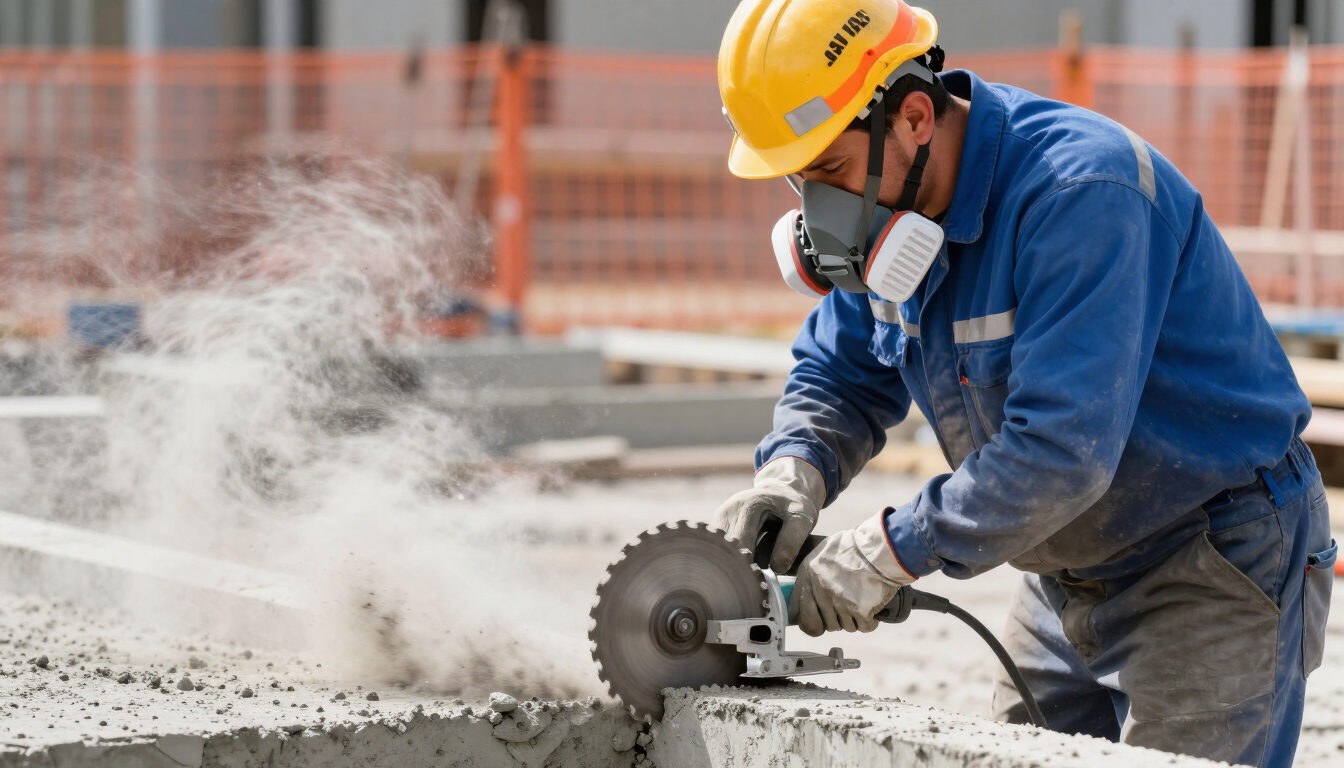
Considering the very strict regulation of 0.075 mg per m³ of silica dust in the breathing zone of a user corresponds with a volume of 0.5 cm silica dust in a plastic coffee cup in a room with a surface area of a football pitch and a height of 4 metres!). It is virtually impossible to meet these strict requirements without using room cleaners, such as the Dust-Blocker range that are specifically developed for this purpose.
Under virtually all circumstances, Dust-Blockers are able to provide great results. This is essential for the construction supervisor,
considering the announcement by the Social Affairs and Employment Inspectorate that the employer is obliged to prove that exposure to hazardous substances (respirable silica, wood dust, etc) on the workplace remains below the current limit values, whereby the total system (tool, extraction module, vacuum cleaner, water supply) is measured as point of departure.
Fines for not observing the regulations may run up to £8,000 per workplace, and it is even possible that the work activities must be stopped.
What can you do to keep your lungs healthy?
By working carefully and using Dust-Blockers to filter the air, you breathe in 10x up to 100x less particulates. Every breath counts! Every day, day in and day out, you have to be committed and focused on working carefully. This will cost you time now, but the profits will only become clear in about 10, 20 or 30 years.
We are specialised to develop devices to improve indoor air quality, with low space and energy requirements, as well as for variable locations. The aim is to establish a circulating air stream in closed rooms or halls. Because of continuously circulating air layers all fine particulates get disposed of by our special filters in the machine, so the clean air can be fed back into the room.
The composition of the particles in the air is very different. They consist of natural and anthropogenic components. These particles originate mainly from industrial processes, transport, energy, construction activities and agriculture. Also, airborne bacteria, germs, spores, fungi and pollen are disposed by our excellent filter media and contribute a great extent to the improvement of the health status. These micro small particles are found almost over weeks and months in permanent limbo in rooms again.
10 reasons to buy a Dust-Blocker
- A general dust reduction up to 95%. (Dust / fine-dust) with possibilities to get Dust values in areas between ISO-6 - ISO 9(ISO146441-1).
- Large Dust reduction can avoid the building of an ATEX dust explosion-proof room.
- (Ex)Aerosols in air are filtered, what reduces errors in machines and computers.
- Avoid dust on packing material/finished goods.
- Easy upgrade of labour limit values.
- Clearly better air to breathe Dust / Pollen / Bacteria free.
- A huge contribution to the improvement process at working places.
- A clear reduction in soil and end cleaning.
- Saving in energy cost up to 30%.
- Castors make the Dust-Blocker ultra-manoeuvrable.
To Measure is to Know
These days we are able to establish locations where fine dust occurs and to measure the concentrations. The government recognises the risk of working in an environment with fine dust and is tightening up regulations