Protecting firefighter health through smart IAQ monitoring
Sue Richardson • July 29, 2025

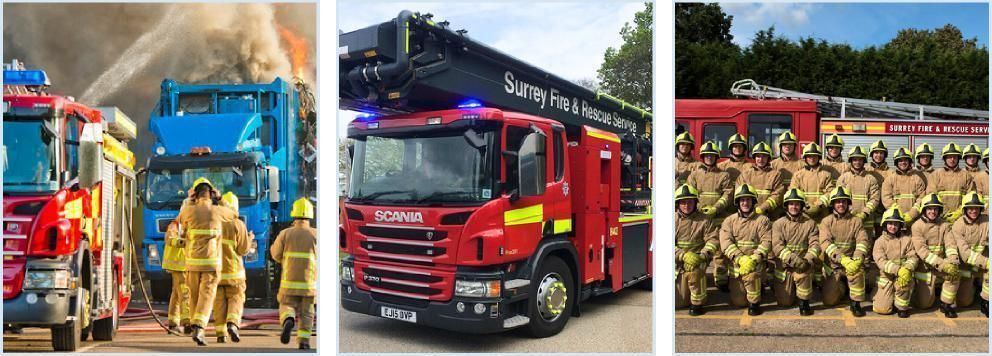
After the World Health Organization classified occupational exposure as a firefighter as carcinogenic to humans (Group 1), understanding the risks present in training environments became a clear priority. In response, Surrey Fire and Rescue Service launched an initiative to monitor indoor air quality (IAQ) at their Training Centre, focusing on airborne pollutants generated during simulation exercises.


The objective was to gather real-time, high-resolution data on key IAQ parameters to better assess exposure levels, inform preventive actions, and support long-term occupational health strategies. This project reflects a growing need for evidence-based risk management in high-exposure professions. 

Solution

To accurately assess exposure risks across different environments, Surrey Fire and Rescue Service deployed a targeted monitoring strategy adapted to the specific conditions of each space.


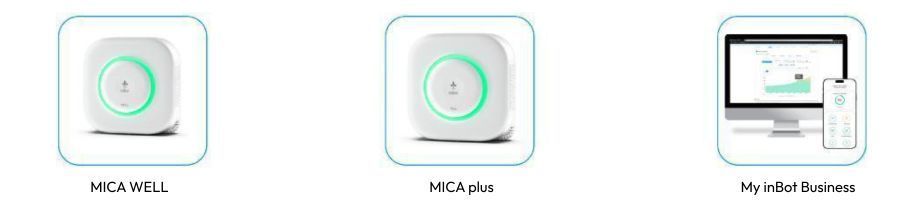
MICA WELL  devices were installed in fire service bays, offering advanced IAQ monitoring aligned with WELL Certification and enabling the detection of critical pollutants such as NO2.


MICA Plus units were deployed in offices and support areas to monitor key parameters including CO2, particulate matter, and formaldehyde.


A mix of WiFi  and NB-IoT connectivity ensured autonomous, real-time data transmission across all four fire stations, with no dependency on local IT infrastructure.


All devices were connected to the My inBiot Business platform, giving teams access to live dashboards, smart alerts, and automated reporting tools.


This distributed, plug-and-play system enabled fast deployment while supporting both day-to-day operations and strategic health monitoring initiatives across the Surrey network. 

inBiot Products
Outcomes & Benefits

Real-time exposure insights: Live data helped Surrey Fire Service understand pollutant levels during training activities, enabling more effective risk management.


Staff education and awareness:  IAQ data became a valuable tool for internal training, raising awareness among personnel about environmental health risks.


Preventive action:  The system allowed Surrey Fire Service to implement targeted remedial measures where elevated pollutant levels were detected.


Scalable success:  The effectiveness of the deployment led to adoption by other fire services, including Hampshire, Buckinghamshire, Kent, West Midlands, and South Wales.


Reliable technical support:  Ongoing collaboration with Ultra Protect ensured seamless operation and strong client support throughout the project.


Future-ready infrastructure:  With WiFi  and NB-IoT connectivity, API access, and platform integration, the solution is fully adaptable to evolving operational needs. 

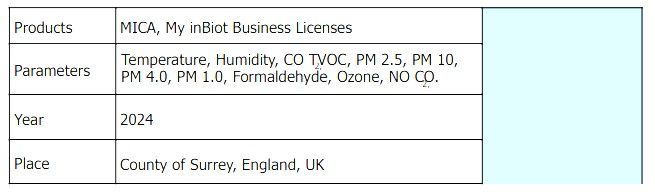
Project details
Testimonial 

“We were concerned about the level of exposure our staff faced during training, and previous air quality reports only gave us a brief snapshot in time. We needed a more robust, cost-effective solution to provide real-time data we could act on.


After engaging with Ultra Protect, we deployed inBiot monitors with WiFi and SIM connectivity. Within hours, we had 24/7 access to live data via web and mobile platforms, giving us full visibility into environmental conditions.


This information has been key to educating our teams and taking preventive measures when pollutant levels rise. I particularly focus on PM2.5 and total VOCs, which clearly reflect the activities being carried out.”
— Ian Ray Tech IOSH, Health and Safety Advisor, Surrey Fire and Rescue Service
By Ultra Protect • September 22, 2026
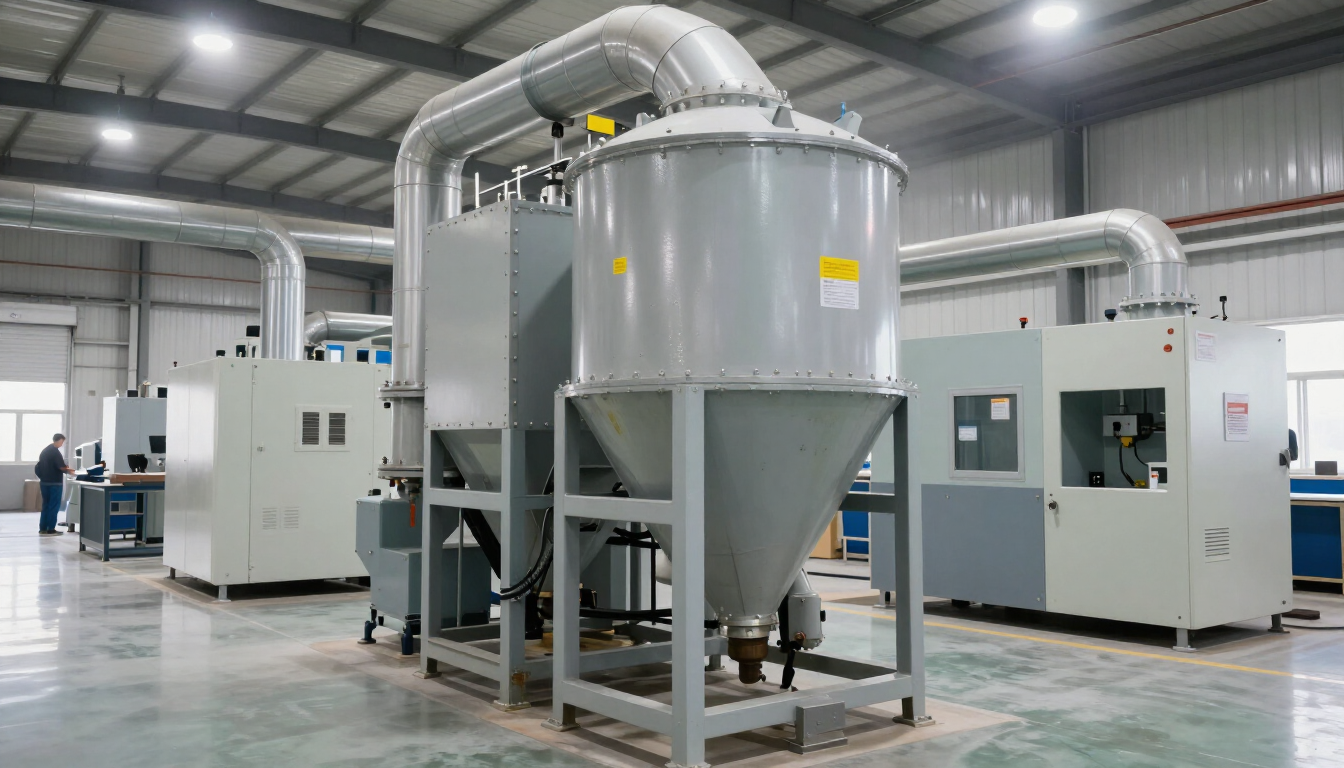
Discover what a dust extraction system is, how it works, and whether fixed or mobile extraction suits your business. A practical guide from Ultra Protect.
Close-up of gray gravel stones filling the frame
By Andy Potter • September 7, 2026
If you're responsible for health and safety in your workplace, you've probably encountered the terms "workplace exposure level," "TWA," and "STEL." But what do they actually mean, and why do they matter for dust management? The simple answer: these are legal limits set by the Health and Safety Executive (HSE) to protect workers from harmful dust exposure. If you're not monitoring them, you're flying blind and potentially breaking the law. What is Workplace Exposure Level? A workplace exposure level (WEL) is the maximum amount of a harmful substance that a worker can be exposed to during their working day without suffering adverse health effects. For dust, it's measured in milligrams per cubic metre of air (mg/m³). The HSE sets these limits based on scientific evidence about how different dust types affect human health. Different dusts have different exposure limits because they pose different risks. For example, the WEL for respirable crystalline silica is far stricter than for general inert dust, because silica is significantly more harmful to the lungs. Think of it this way: the WEL is your compliance baseline. However, being below a WEL does not by itself discharge the COSHH duty. Download the HSE's guidance on workplace exposure limits If you want to understand the levels in your workplace contact us about our silica air sampling services TWA: The 8-Hour Average TWA stands for Time-Weighted Average, and it's the most commonly referenced exposure limit. The TWA measures the average concentration of a substance over a standard 8-hour working day. Here's why that matters: dust exposure isn't constant. Workers might face high concentrations during certain activities (cutting, grinding, demolition) and lower concentrations during others. The TWA accounts for these fluctuations by averaging them out over the full shift. This recognises that workers can tolerate brief periods of higher exposure, provided the average stays within acceptable limits. For example, the current WEL for respirable crystalline silica is 0.1 mg/m³ as an 8-hour TWA. This means that if a construction worker is grinding stone for part of their shift but doing lower-dust tasks for the rest, the daily average should not exceed this level. The advantage of TWA is that it's practical for real-world work. Few jobs maintain constant dust levels. The disadvantage is that it can mask dangerous peaks, if a worker is exposed to very high concentrations for a short period, the TWA might still look acceptable. STEL: The Short-Term Exposure Limit STEL stands for Short-Term Exposure Limit, and it's your safety net for peak exposures. A STEL is the maximum concentration a worker should experience during any 15-minute period in a working day, and no more than four such periods should occur, with at least 60 minutes between them. The STEL exists precisely because the TWA can obscure dangerous peaks. Imagine a worker exposed to very high silica dust for 15 minutes whilst cutting stone, then lower levels for the rest of the day. The TWA might be within limits, but those 15 minutes could still cause significant lung damage. There should be a maximum of 4 STEL's in a single working day and there must be at least 60-minutes between each STEL period. Not all dusts have a STEL, but those that do (like respirable crystalline silica) reflect a recognition that short, intense exposures carry genuine health risks that the 8-hour average doesn't capture. Reducing personal exposure to inhalable dust with Cleanspace Respirators