
Since the COVID outbreak, indoor air quality's crucial role in our health, safety, and productivity has become more apparent and requires more consideration. People in the UK spend up to 90% of their time indoors, a good part of which is spent in the workplace.
However, indoor air can become five times more polluted than outside, which can directly impact an employee's well-being, leading to health problems like headaches, fatigue, respiratory problems, and decreased cognitive functions.
Employers are legally required to make sure the work environment is safe and healthy and maintain IAQ under UK indoor air quality regulations. This would include proper ventilation and real-time data monitoring to manage the best air quality.
With this article, our specialists at Ultra Protect have compiled a comprehensive indoor air quality guide that will help you understand UK legislation and the steps you need to take as an employer to ensure a safe and healthy environment is provided for employees.
Understanding Your Legal Responsibilities as an Employer
What you need to understand is that, currently, employers are legally responsible for maintaining indoor air quality. While there isn’t one overarching legislation in the UK, there are some indoor air quality standards and guidelines that employers can follow.
Under the Health & Safety at Work Act 1974
Employers must ensure a safe working environment, which includes finding ways to control exposure to harmful pollutants.
It is important to remember that your employees don't need to have been injured or made ill through your negligence as an employer to file a claim and prosecution to follow.
According to this legislation, the minimum you should do is:
Identify the hazards that could cause injury or illness.- Decide the likelihood of someone getting harmed and how severe the risk is.
- Take the necessary actions to eliminate the hazards or manage the risks
The Workplace (Health, Safety & Welfare) Regulations 1992
This regulation states that all employers must make sure workplaces have adequate ventilation, with sufficient fresh air for all occupants (Regulation 6). It also highlights that ventilation systems must be maintained in good working order and regularly cleaned for the best air conditions (Regulation 5).
These regulations recommend a fresh air supply of 5-8 litres per second per person. In order to measure and manage this, employees should monitor air quality by putting systems in place that can regularly check CO2 levels and air quality. If external pollutants are present, these systems should filter them out.
Essentially, you should ensure regular maintenance and monitoring with real-time data to comply with regulations and maintain the fresh air your employees deserve.
And now that you understand your legal obligations, let's look at some thresholds you need to have in mind and ways you can make sure the air quality in your workspace is compliant.
Some Threshold Standards to Keep In Mind
There are some thresholds you should be aware of for pollutants like CO2, VOCs, particulate matter, and carbon monoxide that determine acceptable air quality levels.
For example, CO2 levels in workplaces should generally stay below 1000 ppm to avoid health risks. Particulate Matter (PM2.5), on the other hand, should not exceed 10 µg/m³ (annual average) or 25 µg/m³ (24-hour average). Volatile organic compounds (VOCs) have no specific limit, but concentrations should be kept as low as possible to prevent respiratory irritation. And finally, carbon monoxide (CO) should remain below 35 ppm over an 8-hour exposure.
All of these involve indoor air quality monitoring and real-time data to make sure you identify the issues as early as possible.
How to Improve Indoor Air Quality In Your Workspace
There are several key strategies we suggest you implement to ensure good air quality and regulation compliance in the workspace:
Regularly Ventilate Your Space to Maintain
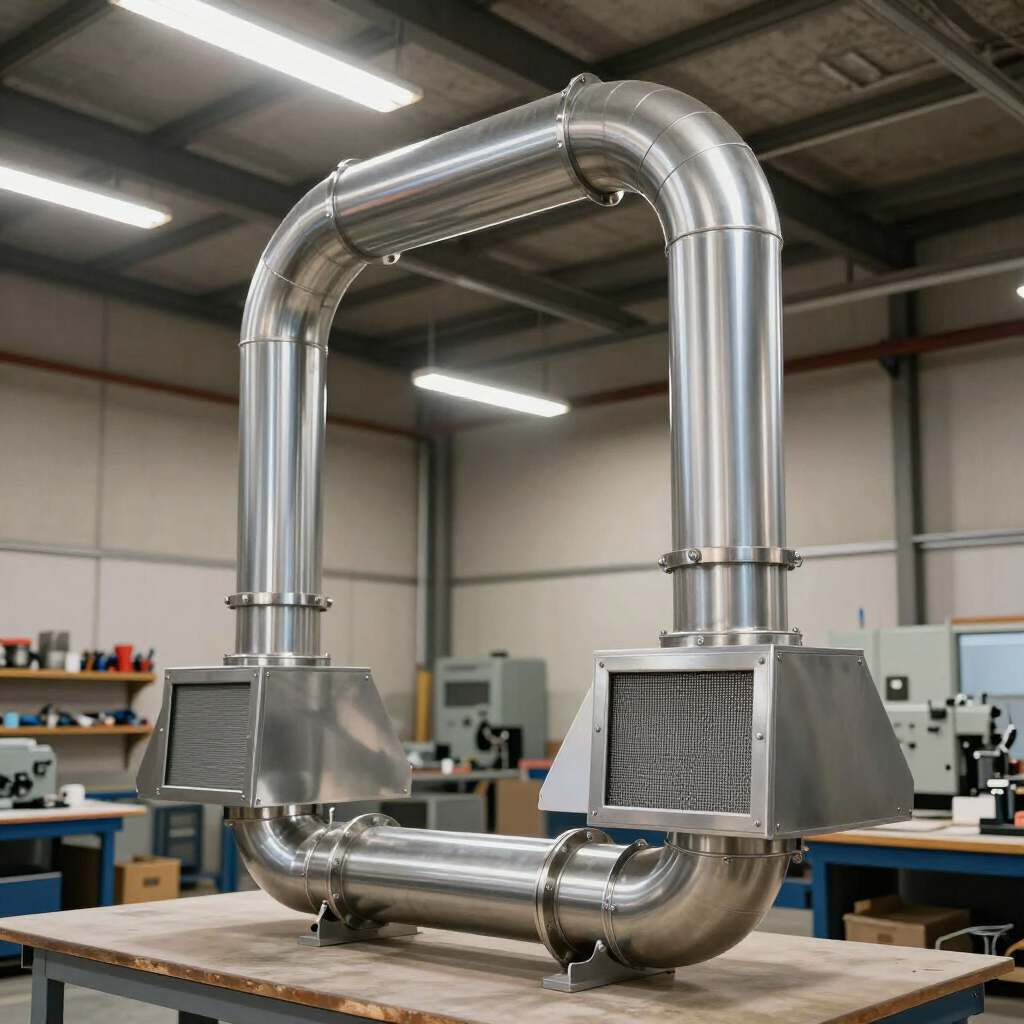
Regular fresh air entry can significantly improve the air quality of your offices. To help you with this task, consider mechanical ventilation with heat recovery systems (MVHR) during construction or renovation. These can provide filtered air and improve energy efficiency.
They work by extracting stagnant air and transferring heat to the incoming fresh hair through a heat exchanger, always keeping the heat inside the home. MVHR systems are an excellent, cost-efficient choice for improving indoor air quality.
If you'd like to install MVHR, consult ventilation experts like our team at Ultra Protect. We’re always available to answer your questions and provide expert advice on heat recovery systems solutions.
Control the Source of Pollution
Finding and reducing sources of indoor pollutants like combustion appliances, building materials, cleaning products, etc.
It is also important to locate the sources of indoor pollutants, which often can be combustion appliances, building materials, or cleaning products. Make sure to opt for products with low volatile organic compounds (VOC), and don't forget to control moisture indoors to prevent mould.
Install Air Purification Systems
Air purifiers can help filtration and remove particulate pollutants, gases, and odours from your working space.
Clean & Maintain Regularly
Don't forget to regularly replace filters, vents and ductwork to prevent the recirculation of dust and other pollutants. It is also worth upgrading old ventilation equipment as modern solutions tend to have better systems and improve airflow and filtration.
Indoor Air Quality Testing & Monitoring
So, what can you do to assess the air quality in your workspace? One common method includes installing CO2 monitors, which will measure carbon dioxide levels and airflow. You can also implement IAQ monitors, which track multiple parameters like temperature, humidity, and VOCs.
Smart indoor monitoring services like inBiot's real-time IAQ monitoring system are extremely useful. They allow for continuous tracking, offering instant alerts and real-time data that can help you optimise ventilation and always stay on top of the game with air quality standards.
Relying on these devices can really help you effectively monitor and improve your workspace’s environment and take a lot of the work off your hands.
Ensuring Optimal Airflow In Your Workplace
Creating a safer and more comfortable environment for your employees is not only your legal obligation but also a way to ensure health and productivity in your workplace.
Adhering to established regulations, monitoring air quality through real-time data, and implementing effective ventilation and purification systems can significantly improve your work environment, reducing the risks of respiratory problems.
At Ultra Protect, we specialise in providing indoor air quality assessments and testing along with comprehensive IAQ solutions tailored to your workplace needs. Our inBiot Indoor Air Quality Monitoring system can offer you continuous, real-time data that will allow you to manage air quality efficiently and ensure compliance with health standards.
If you have further questions or need help understanding all the options for indoor air quality monitoring, contact our expert team. We are always ready to guide you through the right solutions to maintain a healthier environment for your employees.